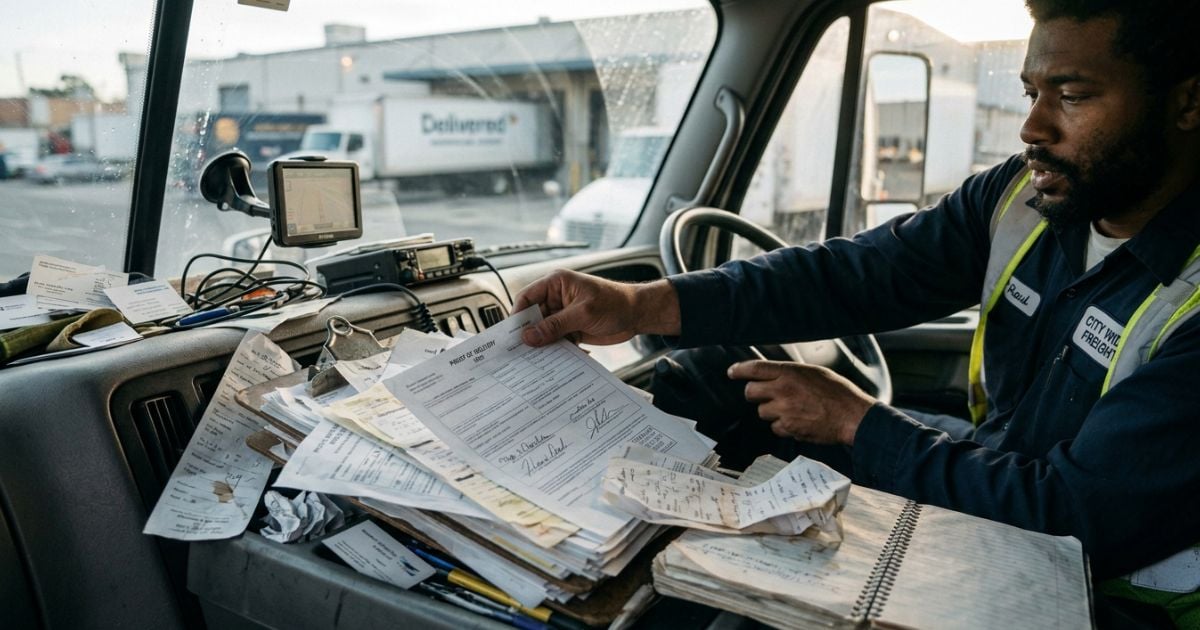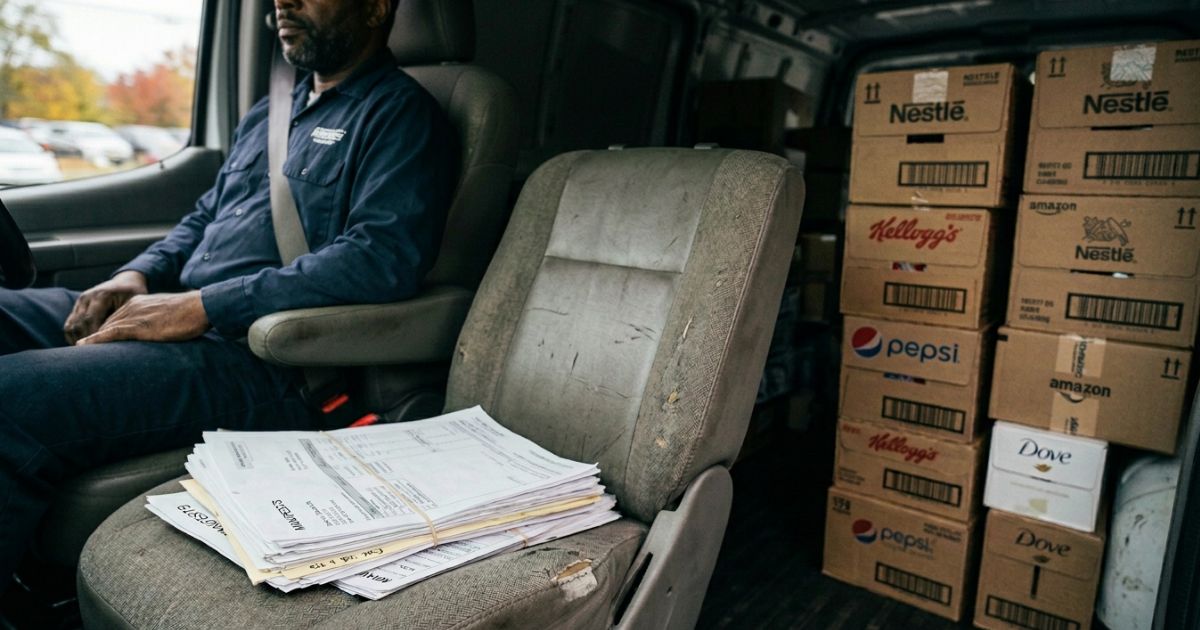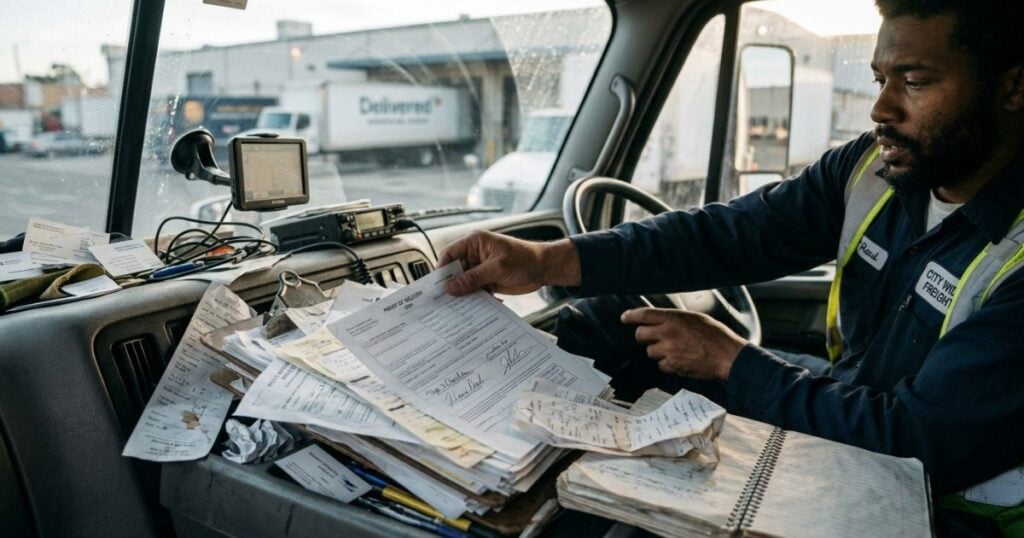
A load is delivered on Tuesday morning. The receiver signs the POD, the driver puts it in the cab with the rest of the day’s paperwork, and carries on with the route.
The invoice for that delivery can’t go out until someone in the office has the signed POD, and that can take a while.
From the drop to the invoice
In a transport business still running on paper PODs, the steps look something like this.
- The receiver signs and stamps the POD at the drop.
- The driver keeps it until the end of the route, or the end of the trip if it’s long-distance.
- The POD is handed in at the depot, usually in a batch with the rest.
- Someone at the depot sorts the batch and sends it to head office, or scans it.
- Debtors match each POD to its invoice, often by hand.
- The invoice is released.
Subcontracted loads add another step: the subcontractor collects PODs from their own drivers and sends them on, sometimes weekly, sometimes at month end.
Where the time goes
The cab. A POD can spend days in the truck before it reaches a depot. On long-distance routes, it can be a week or more.
The batch. Depots handle PODs in batches because that’s the only practical way with paper. A batch waits until someone has time to sort it.
The match. PODs are signed against a waybill or delivery note number. Invoices carry their own reference. Matching the two is manual, and a smudged or partly torn POD slows it down further.
The dispute. When a customer says a delivery was short, debtors need the POD from that specific drop. If it was filed by date or by route, finding it can take longer than the customer is willing to wait.
What it costs
The first cost is cash. Every day an invoice waits for its POD is a day the business has earned money it can’t yet bill for.
The second is claims. A customer who short-pays an invoice, or takes a deduction, often gets the credit if the POD can’t be produced quickly. Some of those claims are fair. Without the POD, the business can’t tell which.
Four questions for your debtors team this month
- On average, how many days pass between a delivery and its invoice?
- How many invoices are on hold right now waiting for a POD?
- How many disputes last month ended in a credit because the POD couldn’t be found in time?
- How long do subcontractors take to send us their PODs?
Where to start
We start transport businesses with one depot and one route type. PODs are scanned at the depot the day they come back, indexed to the waybill number and matched to the invoice. Capture at the drop follows once the depot is running well.
Our logistics page sets out how Metrofile does this for transport and logistics businesses.
Or run the four questions with your debtors team first, and send us what you find.